Beginner’s Guide to Understanding Musical Scales
Musical scales are fundamental building blocks in music theory, providing a framework for melodies, harmonies, and improvisation. Understanding how scales are constructed and their role in music can enhance your appreciation and performance. This guide explores the basics of major and minor scales, their structure, and practical applications.
Scales are sequences of notes arranged in ascending or descending order, typically spanning an octave. They serve as the palette from which melodies and chords are drawn. In Western music, the major and minor scales are most common, each with distinct characteristics and emotional qualities. By learning their patterns, you can begin to recognize scales in familiar tunes and apply them in your own playing.
This article will walk you through the construction of major and minor scales, the importance of intervals, and how to identify scales in everyday music. Whether you are a beginner musician or simply curious about music theory, this guide aims to provide a clear and practical foundation.
What Are Musical Scales?
A musical scale is a series of notes ordered by pitch, usually within the range of an octave. The most familiar scales in Western music are the major and minor scales, each comprising seven distinct notes before repeating the first note at a higher pitch. These scales are defined by specific patterns of intervals—the distances between consecutive notes. The interval pattern determines the scale’s unique sound and emotional character.
Scales are not arbitrary collections of notes; they follow precise mathematical relationships. The major scale, for instance, follows a pattern of whole and half steps: whole, whole, half, whole, whole, whole, half. This pattern can be applied starting on any note, resulting in a major scale in that key. Similarly, the natural minor scale follows the pattern: whole, half, whole, whole, half, whole, whole. These patterns are the foundation for understanding how scales are built and how they function in music.
Beyond major and minor, there are other scales such as modes, pentatonic, and chromatic scales, each with their own interval structures and uses. However, major and minor scales are the most prevalent in Western music and serve as an excellent starting point for beginners. Recognizing these scales in melodies can deepen your understanding of how music is organized.
Constructing Major Scales
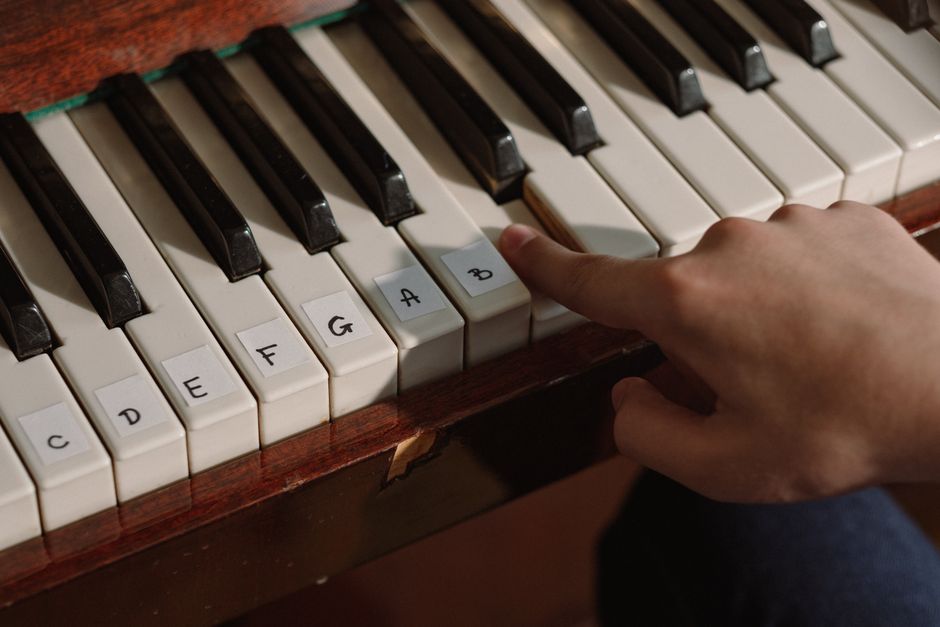
The major scale is often described as bright, happy, or resolved. Its construction begins with a root note, and the pattern of whole and half steps is applied to generate the remaining notes. For example, the C major scale consists of the notes C, D, E, F, G, A, B, and then C again. The intervals between these notes are: C to D (whole step), D to E (whole step), E to F (half step), F to G (whole step), G to A (whole step), A to B (whole step), and B to C (half step). This sequence creates the characteristic sound of the major scale.
To construct a major scale starting on any note, you simply follow the whole-whole-half-whole-whole-whole-half pattern. This pattern ensures that the scale sounds major regardless of the starting pitch. For instance, the G major scale includes F# to maintain the pattern: G, A, B, C, D, E, F#, G. The use of sharps or flats depends on the key and is determined by the pattern.
Major scales are ubiquitous in music, from classical to pop. Familiar melodies like “Do-Re-Mi” from The Sound of Music are based on the major scale, making it easy to hear the ascending steps. By practicing major scales on an instrument or singing them, you internalize the sound and structure, which aids in recognizing them in various pieces.
Constructing Minor Scales
Minor scales often convey a sadder, more introspective mood compared to major scales. The natural minor scale follows the pattern: whole, half, whole, whole, half, whole, whole. Starting on A, the A natural minor scale consists of A, B, C, D, E, F, G, A. The intervals are: A to B (whole), B to C (half), C to D (whole), D to E (whole), E to F (half), F to G (whole), G to A (whole). This pattern produces the characteristic minor sound.
There are three types of minor scales: natural, harmonic, and melodic. The harmonic minor scale raises the seventh note by a half step, creating a leading tone that adds tension and is often used in classical music. The melodic minor scale raises the sixth and seventh notes ascending, and lowers them descending, to smooth the melodic flow. Each type has its own distinct flavor and application.
Minor scales are prevalent in many genres, including rock, jazz, and folk. Songs like “Greensleeves” or “Scarborough Fair” use minor scales to evoke a melancholic atmosphere. By learning to construct and recognize minor scales, you can better interpret the emotional intent of a piece.
Intervals: The Building Blocks of Scales
Intervals are the distances between two notes and are crucial to understanding scale construction. The smallest interval in Western music is the half step (or semitone), which is the distance between adjacent keys on a piano. A whole step consists of two half steps. The pattern of intervals in a scale determines its unique sound and classification as major or minor.
Intervals are not only about pitch distance but also about the relationship between notes. For example, the interval from the root to the third note in a major scale is a major third (four half steps), while in a minor scale it is a minor third (three half steps). This difference is what gives major scales their bright quality and minor scales their darker quality. Recognizing these intervals by ear is a valuable skill for musicians.
Understanding intervals allows you to transpose scales to different keys and to analyze melodies. For instance, if you know the interval pattern of a major scale, you can start on any note and construct the scale correctly. This knowledge is essential for improvisation, composition, and ear training.
Recognizing Scales in Familiar Melodies
One of the most practical ways to internalize scales is to recognize them in melodies you already know. Many children’s songs and folk tunes are based on simple major scales. For example, “Twinkle, Twinkle, Little Star” uses the first six notes of a major scale. “Happy Birthday” also follows a major scale pattern, with a few leaps. By identifying the scale used in a song, you can understand its tonal center and predict its melodic movement.
Minor scales appear in songs like “Hey Jude” by The Beatles (the verse is in a major key, but the bridge shifts to minor) or “Summertime” from Porgy and Bess. Listening for the characteristic minor third interval can help you distinguish minor scales from major ones. Practicing scales on your instrument while singing along can reinforce your ability to recognize them in context.
At Resonance Guide, we emphasize the importance of active listening and practice. By applying scale knowledge to real music, you bridge the gap between theory and performance. Start with simple melodies and gradually move to more complex pieces. Over time, you will find that scales become a natural part of your musical vocabulary.
“Music is the arithmetic of sounds as optics is the geometry of light.” — Claude Debussy
In conclusion, musical scales are the foundation of melody and harmony. Understanding how major and minor scales are constructed opens up a world of musical possibilities. Whether you are a beginner or an experienced musician, revisiting scale fundamentals can deepen your appreciation and enhance your skills. Keep exploring, listening, and practicing.